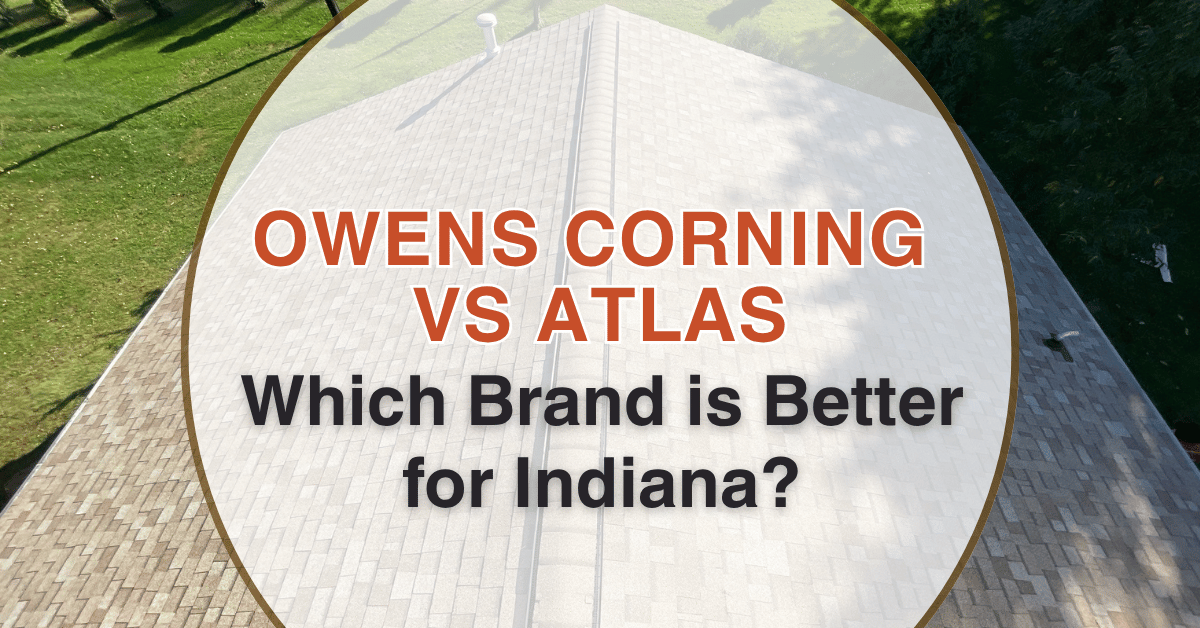
Which shingle brand gives you the best long-term performance for Indiana weather, Owens Corning or Atlas? Is one really better than the other, or are you just paying for the name?
Most homeowners we talk to just want a roof that’s going to last, look good, and not cause problems down the road. The thing is, both brands are solid; it all comes down to what your home actually needs.
Here in the Indiana and Michigan area, your roof has to deal with everything from ice storms to 90-degree heat, sometimes in the same month. Cold weather performance, wind resistance, a good warranty—all that stuff starts to matter a lot more than just the brand name on the bundle.
Equity Roofing has worked with multiple shingle brands over the years, and while we are Owens Corning Platinum Preferred Contractors, we've worked with other manufacturers when they best fit our homeowners' needs. We've come to know and appreciate the strengths of both brands, so now we're passing that experience along to you.
In this article, we’ll break it down in plain terms:
- What's the Difference Between Owens Corning and Atlas Shingles?
- Does Owens Corning or Atlas Perform Better in Cold Weather?
- How Do Roof Warranties Compare for Owens Corning and Atlas Shingles?
- Owens Corning and Atlas Shingles Cost Differences
By the time you’re done reading, you’ll know exactly what to ask your contractor—and which brand makes the most sense for your home and budget.
Let’s get into it.
What's the Difference Between Owens Corning and Atlas Shingles?
Both Owens Corning and Atlas produce shingles for residential homes, though they vary in size and features. Owens Corning stands as one of the largest roofing manufacturers in North America with an extensive contractor network and established warranty support. This widespread presence often translates into smoother claim processes when you need them most. As the bigger company, they have more resources for customer support and contractor training programs.
Atlas takes a different approach as a smaller, more focused company. In our area, Atlas ranks about third in popularity behind CertainTeed and Owens Corning. Despite being smaller, they've built their reputation on:
- Strong customer service relationships with direct claim handling
- Competitive pricing on specialty products
- Wider, heavier shingle design for durability
- Bold color options that some homeowners prefer
- Simpler warranty processes without multiple channels
The interesting thing about manufacturer training is that each company naturally promotes its product as superior. When contractors attend Atlas training, they learn why Atlas is the best choice. At Owens Corning sessions, they hear the opposite. Truthfully, both manufacturers produce quality products that perform well when installed correctly.
Does Owens Corning or Atlas Perform Better in Cold Weather?
Both Owens Corning and Atlas deliver strong year-round performance, but their strengths show up in different seasons. The freeze-thaw cycles common in the Michiana region create unique challenges that affect how quickly shingles seal and protect your home.
Key Performance Differences
| Feature | Owens Corning | Atlas |
| Sealing in Cold Weather | Reliable for temperatures above and below 40°F for Duration FLEX shingles | Reliable for temperatures at 40°F or higher for all shingles |
| Wind Resistance | SureNail strip enhances hold | Wider design resists uplift |
| Granule Loss | Excellent retention over time | Excellent retention over time |
| Algae Resistance | Copper-infused granules; 25-year limited warranty | Copper-infused granules and Scotchgard™ Protector options; 25-year limited warranty |
| Best Season for Install | Fall/Winter | Spring/Summer |
Key Takeaway:
Owens Corning is better suited for colder installs, thanks to its Duration FLEX line, designed to seal below 40°F. Atlas performs best in warmer weather, where its wider shingles seal more efficiently. Algae resistance and granule retention are strong for both, so choosing the right shingle may come down to when you're installing and what your local weather demands.
And yes, before the comments come flooding in, you absolutely can have your roof installed during winter—with the right tools and process. The Asphalt Roofing Manufacturers Association explains how sealing, ventilation, and installation techniques all impact shingle performance in seasonal climates.
We also cover winter roof installations in detail in our blog, Can a New Roof be Put on in Winter?

How Do Roof Warranties Compare for Owens Corning and Atlas Shingles?
The warranty coverage for Owens Corning and Atlas is similar, though with important differences when comparing their multiple tiers side by side.
Comparing Roof Warranties for Owens Corning and Atlas
| Feature | Owens Corning* | Atlas* |
| Labor | Standard Tier: 10 years Second Tier: 50 years Third Tier: 55 years Top Tier: 50 years |
Standard Tier: 10 years Second Tier: 20 years Third Tier: 25 years Top Tier: 50 years |
| Materials | Lifetime | Lifetime |
| Wind | 15 years across all tiers | 15 years across all tiers |
| Algae | Standard Tier: 25 years Second Tier: 25 years Third Tier: 25 years Top Tier: 25 years |
Standard Tier: 10 years ARS Second Tier: 10 years ARS Third Tier: lifetime Top Tier: lifetime |
| Workmanship Warranty | Standard Tier: none Second Tier: none Third Tier: 10 years Top Tier: limited lifetime, reduced after 25 years |
Standard Tier: none Second Tier: none Third Tier: none Top Tier: none |
| Transferable | Once | Once |
*Refer to the official Owens Corning and Atlas Warranty Overview for details and exclusions
Key Takeaway:
Both Owens Corning and Atlas offer strong lifetime material coverage and equal wind protection. However, Owens Corning includes more extensive labor and workmanship warranties, especially in higher tiers.
Atlas focuses more on straightforward material warranties, with fewer contractor-related guarantees. This makes choosing an experienced and trusted installer, regardless of brand, a top priority.
Need more information on roof warranties? We’ve got you covered in our roof warranty guide for 2025.
Owens Corning and Atlas Shingles Cost Differences
Pricing between standard architectural shingles stays surprisingly similar—the brands compete closely on basic products. The real differences appear in specialty lines and long-term value.
Impact-Resistant Options
| Feature | Owens Corning Duration FLEX | Atlas StormMaster |
| Upgrade Cost | $2,000–$3,000 | $1,000–$1,500 |
| Impact Resistance | Class 4 (highest possible) | Class 4 (highest possible) |
| Wind‑resistance claim | Up to 130 mph | Up to 150 mph |
Key Takeaway:
Both Atlas
StormMaster and Owens Corning Duration FLEX offer top-tier Class 4 impact protection, but they approach it differently. Atlas delivers it at a lower upgrade cost with a higher wind rating, making it a strong value for budget-conscious buyers.
Owens Corning costs more, but adds cold-weather flexibility, which may be worth it for Indiana homeowners replacing roofs during colder months. The right choice depends on your priorities—price, wind resistance, or install season.

Planning Your Roof Replacement
By now, you’ve seen how Owens Corning and Atlas stack up in key areas like cold-weather performance, impact resistance, warranties, and overall value. While both brands are solid, the better choice depends on your install timing, budget, and how long you plan to stay in your home.
You came here trying to figure out which shingles make the most sense for your roof—especially when different contractors keep recommending different brands. We’ve broken down the real pros and cons so you can make a decision with confidence.
Your next step is to start planning for your budget. We’ve got a straightforward breakdown of roof replacement costs in Indiana and Michigan that walks you through what to expect.
Equity Roofing has helped hundreds of homeowners across Indiana and Michigan make smart, informed roofing decisions—without the sales pressure. If you ever want a side-by-side shingle comparison or just someone to walk your roof and give you an honest take, we’re here to help.
%20(9)-1.png?height=200&name=Feature%20Image%20for%20Blogs%20(July)%20(9)-1.png)
.png?height=200&name=Why%20Ice%20Dams%20Form%20on%20Midwest%20Homes%20(And%20How%20to%20Stop%20Them).png)
Leave a comment.