
If you're replacing a roof in a northern state, you’re likely to see “Ice and Water Shield” listed in your estimate. Most homeowners have never heard of it until that moment, which can make it feel like a confusing or unnecessary upsell.
At Equity Roofing, we’ve walked hundreds of homeowners through this exact concern. Ice and Water Shield is one of the least understood—but most critical—parts of your roofing system. If it’s skipped or installed improperly, it can void warranties or home insurance, lead to leaks, cause wood rot, and result in costly structural damage.
In this article, we’ll break down what an Ice and Water shield actually does, where it’s required by code, how it protects your home, and how to know if your contractor is doing it right. You’ll leave knowing exactly what to look for in your quote—and how to protect your investment from corners being cut.
Clickable Table of Contents
- What Is an Ice and Water Shield?
- Where Are Ice and Water Shield Supposed to be Installed?
- Are Ice and Water Shield Required by Building Code?
- Do All Roofs Actually Need Ice and Water Shield?
- Types of Ice and Water Shield
- How Much Do Ice and Water Shield Cost?
- What to Ask Your Roofer During Your Estimate
- Preparing Yourself for a Winter Roof
What Is an Ice and Water Shield?
An Ice and Water Shield is a self-adhering waterproof membrane installed directly on your roof deck beneath the shingles. It comes in rolls about three feet wide and creates a watertight seal in the spots most vulnerable to leaks—especially along the eaves, in valleys, and around chimneys or vents.
While shingles are designed to shed water, this membrane is the backup. Think of it as the safety net protecting your home's wood structure from trapped water.
How It Works (Especially in Winter)
In snowy climates like Central Pennsylvania or Northern Indiana, your roof experiences constant freeze-thaw cycles. Here's what happens:
- Snow melts during the day
- The meltwater refreezes at night near the roof edge
- Ice builds up, forming an ice dam
- Melted water gets trapped behind it and pools on your roof
The Ice and Water Shield helps to stop that moisture before it reaches your roof decking. It sheds water off your home instead of letting it soak in.
That said, Ice and Water Shield is meant to be a backup, rather than a solution, to ice damming. We detail this more in our article, Does Ice and Water Shield Prevent Ice Dams?
Where Are Ice and Water Shield Supposed to Be Installed?
In most northern regions, roofers install it in four main areas:
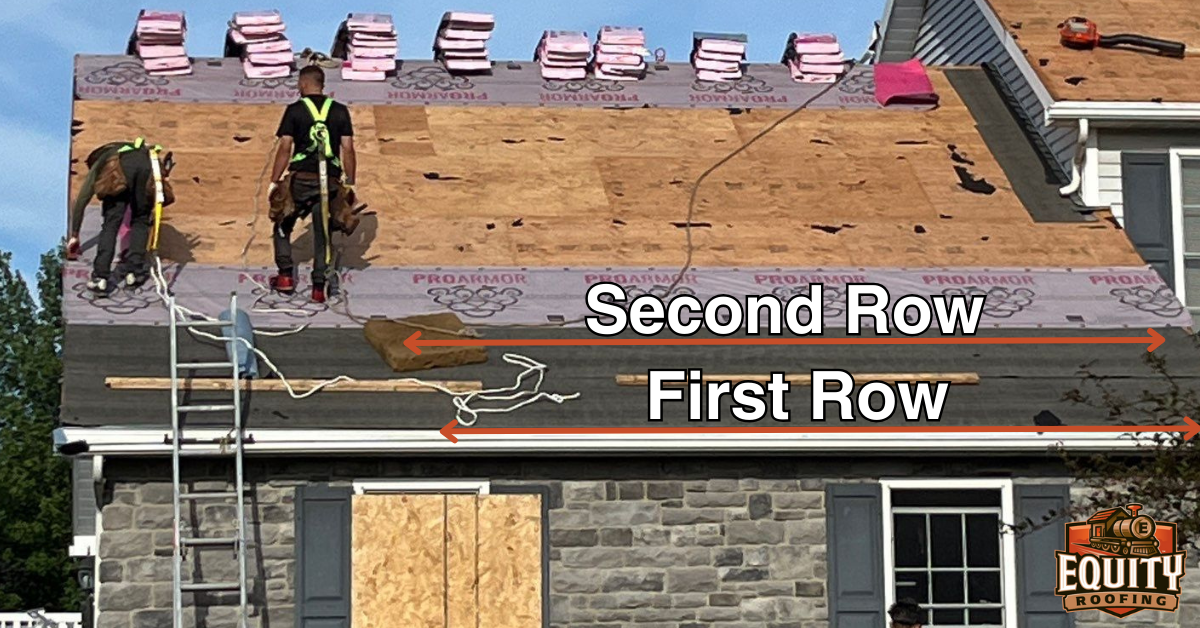
Eaves: Two rows (six feet total) along the gutter line
Valleys: Where two roof slopes meet and direct large amounts of runoff
Around penetrations: Chimneys, skylights, vents—anywhere flashing is used
Low-slope sections: On roofs with pitches 3:12 or lower where water drains slowly
Why You Should Have Two Rows of Ice and Water Shield
Building codes in northern states require an ice and water barrier that extends at least two feet inside the heated wall line of your home. However, because most houses have about a one-foot soffit overhang, a single three-foot roll often isn't enough to meet this requirement.
That's why reputable roofers install two rows (six feet total)—to guarantee compliance and full coverage regardless of your home's specific measurements.
Some contractors only install one row and claim it meets code. When you factor in pitch and overhangs, it often doesn't. Always confirm the coverage area during your estimate.
Are Ice and Water Shield Required by Building Code?
If you're in Central PA, Northern Indiana, or Southern Michigan, Ice and Water shield are both required by code and essential for protecting your investment.
| Region | Requirement | Reason |
| Northern U.S. (PA, IN, MI, NY, OH, etc.) | Required by code | Frequent snow, ice dams, and freeze-thaw cycles |
| Mid-Atlantic (VA, KY, MO) | Often recommended | Occasional freeze conditions |
| Southern states (TX, FL, CA, AZ) | Not required | Warm climates with no ice dam risk |

Do All Roofs Actually Need Ice and Water Shield?
In cold climates, Ice and Water Shield are absolutely needed. But not every part of every roof needs to be covered in it.
Why Aren’t Ice and Water Shield Put on the Entire Roof?
Some homeowners assume "more is better." Covering the entire roof can actually cause problems:
Higher cost: It's pricier than synthetic underlayment
Trapped moisture: It acts as a vapor barrier, reducing your roof's ability to "breathe."
The best practice is two rows at the eaves, coverage in valleys and penetrations, and synthetic underlayment everywhere else.
Real Examples of Roof Damage Without Ice and Water Shield
Equity Roofing has replaced hundreds of older roofs built before Ice and Water Shield became mandatory in the early 2000s. The pattern is consistent across every single one: rotted wood decking near the gutters, soft fascia boards, water stains along the eaves, and hidden leaks.
Once the shingles come off, the damage becomes obvious. All of it could've been prevented with this simple membrane. For homes in northern climates, this isn't optional protection—it's the difference between a roof that lasts decades and one that starts failing within years.
Types of Ice and Water Shield
Here are the main variations of Ice and Water shield you'll encounter and what sets them apart.
Granular vs. Smooth
Granular has a light texture that makes it safer to walk on and easier to install. Smooth is slicker and typically used on low-slope areas.
High-Temp Version
Designed for metal roofs, this version handles higher heat and reduces condensation under metal panels.
Brand Name vs. Generic
Owens Corning, CertainTeed, and others make excellent products—but some generic versions perform just as well when installed correctly. Manufacturer warranties rarely require a specific brand of Ice and Water Shield.
How Much Do Ice and Water Shield Cost?
The added cost of Ice and Water Shield depends on how much material your roof will need to meet code requirements. We’ll look at a typical ranch-style home (2,200–2,900 sq. ft.) as an example.
Cost for Ice and Water Shield for 2,200–2,900 sq. ft. Ranch Home
| Item | Cost Range |
| Material (per roll) | $60–$75 |
| Labor | Usually included in roof quote |
| Total Added Cost | $200–$400 |
This investment prevents thousands of dollars in potential water damage. If a contractor recommends skipping it to "save money," that's a red flag about their workmanship and priorities.
What to Ask Your Roofer During Your Estimate
While looking over your estimate, make sure to ask the following questions:
Where will you install Ice and Water Shield—and why? They should be able to explain their coverage plan clearly.
How many rows are you using on the eaves? In snowy climates, anything less than two rows should come with a detailed explanation of why your home is an exception.
Can you walk me through how your plan meets local code? This shows whether they truly understand the requirements or are just guessing.
What type or brand do you use? You deserve to know what's protecting your home.
Will skipping it affect my roof warranty? Yes, it will. For areas that require Ice and Water Shield by code, the manufacturers will require it for warranty coverage.
Preparing Yourself for a Winter Roof
Ice and water shield may never be visible once your roof is finished, but they do some of the heaviest lifting in protecting your home. In cold climates, it’s not just required by code; it’s essential for preventing rot, leaks, and warranty issues.
If you’ve ever questioned whether it’s really necessary, the answer is yes—especially in regions like Central PA and Indiana, with harsh winters and freeze-thaw cycles. It’s a small upfront investment that can prevent thousands in damage later.
Your next step is to learn more about winter roofing by reading, Can a New Roof be Put on in Winter? This article walks you through when it’s possible, what challenges to expect, and how to know if your contractor is up to the job.
At Equity Roofing, we don’t just meet code—we help you understand it. Because when it comes to protecting your home, knowledge is just as important as good materials.


Leave a comment.