
Protecting your home's covering is a crucial part of keeping your property and family safe. Here is...
You just got a new roof from a great contractor with high-quality materials. You feel confident that you won’t have to deal with any roofing issues for years—aaand then winter hits, and there’s water leaking from your ceiling.
Unfortunately, your brand-new roof might be a victim of ice damming. Ice dams are one of the most misunderstood roofing problems out there, and they catch a lot of homeowners off guard, especially right after a new install.
Equity Roofing has helped hundreds of homeowners in Central PA prevent and manage ice dam damage. Whether it's working around their roof design or making recommendations for ventilation and insulation, our crew always takes the time to answer our homeowners' questions so that they understand just what problem they’re dealing with.
Once you understand what causes ice dams and what your options are, you’ll know exactly what steps to take next.
What Is an Ice Dam?
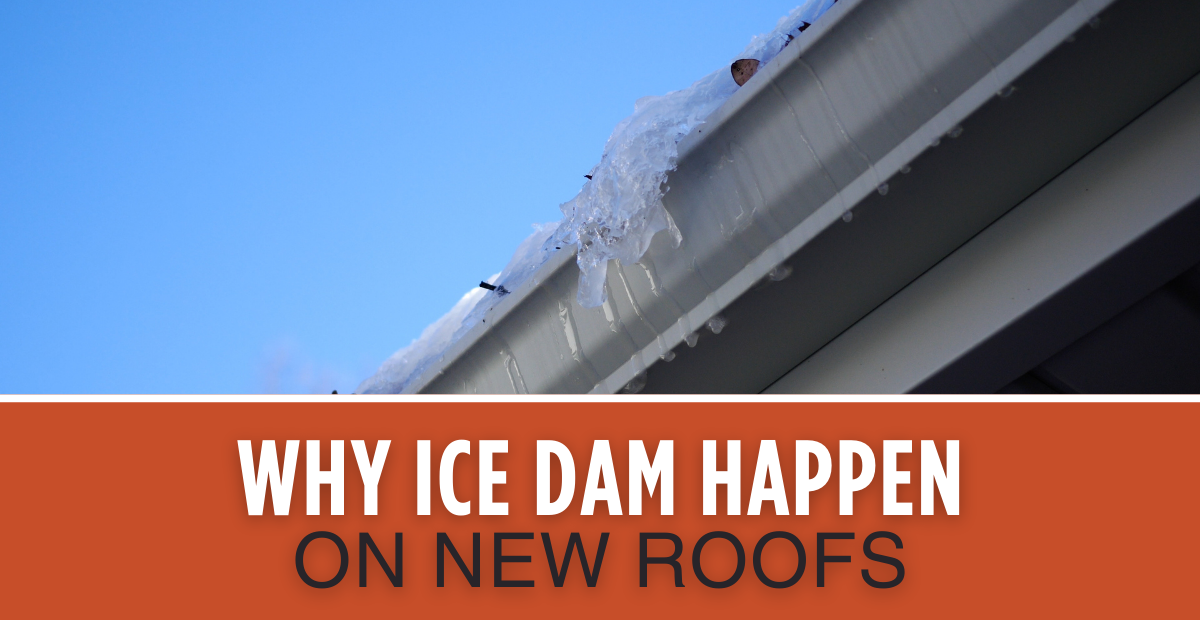
An ice dam forms when snow on your roof melts and then refreezes before it can drain off. This happens most often near the edges of your roof, where it’s colder. As more snow melts above and hits that frozen barrier, water starts backing up. Over time, that backed-up water can work its way under your shingles and into your home.
Ice dams can grow surprisingly fast during a stretch of cold days. The more heat that escapes from your home into the attic, the more snow melts, and the faster the dam builds up.
Why Do Ice Dams Happen on New Roofs?
When a new roof suffers from ice dams, the reasons almost always come down to ventilation, insulation, air leaks, or the home's design. None of those are things a new roof can fix on its own.
Poor attic ventilation is often the biggest culprit. If your attic cannot move air properly, heat from your living space gets trapped up there. That heat warms the roof deck from below, melts the snow above, and starts the freeze-thaw cycle that builds a dam.
Not enough insulation makes this cycle even worse as heat escapes freely into the attic. Current code in Central PA recommends at least R-49 in your attic ceiling. Air leaks around pipes, light fixtures, or other penetrations compound the problem further. If there’s a gap, warm air will find it!

Examples of Ice Dams on Central PA Homes
We have had a small number of callbacks from customers with newer roofs who experienced ice dam leaks, and both situations pointed to the same root cause: ventilation.
In one case, a Danville home had almost no insulation and ventilation that, while technically present, simply could not keep up with the amount of heat escaping from the house. No amount of ventilation can fully compensate for that much warmth pouring into the attic.
In this case, the roof itself was installed correctly; the problem was entirely in the attic. Proper insulation and ventilation were the solution these homeowners needed.
The second home, located in Harrisburg, had inadequate ventilation and very little roof overhang. A short overhang gives ice forming at the edge less room to build before it starts causing trouble, so even a modest dam can back up water toward the roof faster than it would on a home with a longer overhang.
In both cases, we went out, removed the ice and snow, and then walked the homeowners through what was actually driving the problem and their options for a fix. Fortunately, our area doesn’t typically have severe ice damming (though this 2026 winter was certainly an exception, with more ice dams than we’ve ever seen before!) Ultimately, the owner opted for ice dam maintenance as needed.
What Are Dead Valleys or Tight Valleys?
A dead valley forms where a roof slope runs directly into a wall with no outlet for water to drain, while a tight valley is when two roof slopes meet at a sharp angle with very little clearance. Some of the worst ice dam problems we see here in Central Pennsylvania come down to dead or tight valley designs in the roof!
Even a little snow can dam up quickly in these spots, because there is simply nowhere for the meltwater to go. Homes with a lot of gables across the front often have these kinds of valleys built into the design. They look great from the curb, but in a tough winter, they can be a real headache.
If your home has a dead valley or a tight valley, there are options to improve drain flow. A roofer can sometimes reframe a dead valley into a standard valley. Alternatively, they can install rubber roofing material in that section instead of shingles, since rubber handles standing water much better.
Self-regulating heat tape is also a reasonable solution for areas where a structural fix isn’t practical.
Can Ice dams Be Covered Under Your Roof Warranty?
This is one of the most common questions we get, and the answer is that ice damming is not covered under a roofing workmanship warranty or a shingle manufacturer's warranty. Shingle roofs and metal roofs are not designed to handle ponding water. They are designed to shed water quickly.
Ice and water shield provides a solid backup layer near the eaves and valleys, but think of it like a seatbelt: it helps, but it cannot protect against everything. When water sits still or backs up repeatedly over a whole season, even ice and water shield has its limits.
What’s Covered by Your Roof Warranty
| What Your Roof Warranty Covers | What It Does Not Cover |
| Defects in shingle materials (cracking, premature granule loss) | Damage caused by ice dams |
| Workmanship errors (improper flashing, poor nail placement) | Leaks caused by ponding or backed-up water |
| Leaks directly linked to how the roof was installed | Ventilation or insulation problems in the attic |
| Ice and water shield performance within its design limits | Structural or architectural design issues with the home |
A roofer should always inspect for workmanship issues when you call about a leak. But if the inspection shows the roof was installed correctly, and the leak is coming from ice dam pressure, that’s an issue that goes beyond the roof.
The fix starts with ventilation, insulation, or structural changes—sometimes all three! Improving ventilation during a roof replacement is the best window to make those changes.
How to Fix Ice Dams on a New Roof
If you are already dealing with ice dams on a newer roof, use this table to match your situation to the right next step:
| Root Cause | What to Do About It |
| Poor attic ventilation | Have intake and exhaust assessed; check for blocked soffits and add baffles to keep insulation away from eaves |
| Not enough insulation (below R-49) | Add insulation to the attic ceiling, but only after ventilation is confirmed to be working properly |
| Air leaks around pipes or fixtures | Seal penetrations in the attic floor; this is a low-cost fix that makes a big difference |
| Dead valley or tight valley in the roof design | Ask a roofer about reframing the valley, switching to rubber roofing in that section, or installing self-regulating heat tape |
| No practical fix available (e.g., older manufactured home) | Remove snow from the roof after heavy storms to reduce ice dam buildup |
Keep in mind that insulation and ventilation have to work as a team. Fixing one without the other will only get you partway there. If you are not sure which issue applies to your home, an attic inspection is the fastest way to find out.

A Word to Frustrated Homeowners
If you just spent good money on a new roof and are still getting ice dam leaks, your frustration is completely valid. It feels like the roof (or roofer) failed you. But in most cases, the roof is doing its job. The problem is that the conditions underneath and behind the roof have not changed.
Your best course of action is to understand what’s causing the problem in your home and fix what you can control. We dig a bit deeper into ice dams in our blog, How to Avoid Ice Dams in Central PA.
If you are not sure where to start, we are happy to take a look. We inspect attics during roof estimates and can give you a clear picture of what is going on before you make any decisions.


Leave a comment.