
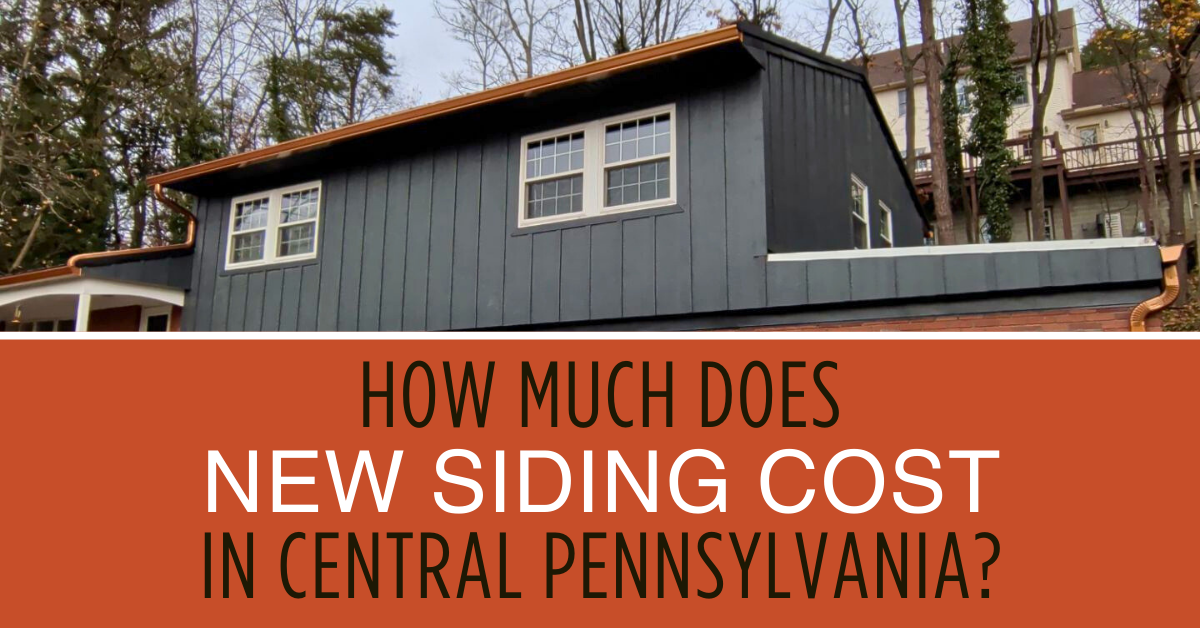
Siding can make or break a home’s curb appeal. Faded colors or cracks can make a home look worn down or outdated, but is siding affordable for homeowners to replace?
Replacing your home's siding can range anywhere from $18,000 to $70,000 or more for the same house. That is a huge gap. The final price depends on the type of siding you choose, the color, the size of your home, and a bunch of other factors that most homeowners do not think about until they get a quote.
For years, Equity Roofing has been dedicated to providing excellent service and roofing for hundreds of homeowners in Central PA—and now, we’re taking on siding, too. In this article, we will break down the cost of siding so you can enter your estimate with a budget in mind.
What Are the Price Ranges for Different Siding Types?
For an average-sized home in Central Pennsylvania, here is what you can expect to pay for different siding options:
| Home Size & Style per sq ft. | Plygem Mastic Ovation (Vinyl) | LP SmartSide Lap Siding (Wood) | LP SmartSide Panel Siding (Wood) |
| Small Home (2,200–2,900 sq ft) | $14,000-$23,000 | $27,000-$28,000 | $29,000-$40,000 |
| Medium Home (2,500–3,300 sq ft) | $19,000-$33,000 | $32,000-$49,000 | $33,000-$55,000 |
| Large Home (3,600–5,500 sq ft) | $23,000-$40,000+ | $39,000-$62,000+ | $45,000-$66,000+ |
Vinyl siding, especially the Ovation line, tends to be the most popular choice for homeowners in this area. It offers a good warranty, looks nice, and doesn’t break the bank. Most homes already have decent sheathing and insulation in place, so the job is pretty straightforward.
Engineered wood products like LP SmartSide cost more, but they are built to last. These products are so durable that manufacturers test them at home shows by letting people swing golf clubs at them! The warranty is also different. LP covers each piece individually, while vinyl warranties typically cover the whole job based on color fading.
Is Light Siding Cheaper Than Dark Siding?
This one surprises many homeowners: light-colored siding is cheaper than dark-colored siding. In some cases, choosing a dark color can add $3,500 or more to your quote, even if you are only doing part of the house.
Dark colors require special additives like Solar Defense technology to help protect against sun damage. Without these additives, dark siding would fade and deteriorate much faster than lighter options.
So if you have your heart set on matching a dark brick front or want a bold color statement, be prepared to pay extra for it.
What Other Factors Drive Up Siding Costs?
The style of your home matters less than you might think. What really adds up are the penetrations and details that require extra work:
- Windows and doors: Every window and door needs to be trimmed out. Larger windows cost more to trim than smaller ones.
- Exterior lights: Each light fixture requires a special mounting block behind it.
- Hose bibs and dryer vents: Every penetration through the siding adds to the labor.
- Number of stories: Two-story homes require scaffolding and planking to be set up, which takes more time and labor.
- Decorative elements: Cedar shake accents on gables can cost ten times more than standard siding in the same area.
A house with fewer lights, windows, and penetrations will cost noticeably less than one covered in fixtures. This can easily save you $1,000 or more.\
Does the Old Siding Need to Come Off?
This depends on the siding already on your house and its condition. In many cases, vinyl and aluminum siding must be removed prior to installation.
When possible, such as when a home has solid wood siding in good condition, contractors can install lath strips over the existing siding and install the new siding on top. This saves a lot of money because you avoid the cost of tearing off and disposing of the old material.
Do You Have to Buy House Wrap?
Yes, house wrap is a standard purchase for siding replacement. Even if your home has house wrap (and most older homes do not), old house wrap should not be reused due to nailing holes from the previous siding.
Adding a proper Weather Resistive Barrier, or WRB, during a siding project is a smart move. Here is what it typically costs:
| Underlayment Option | Price Range | R-Value |
| Standard House Wrap | $2,000-$3,000 | Zero, but drastically reduces air penetration and heating costs |
| Reflective Foil House Wrap | $2,000-$3,000 | R1-R3 |
| 1 Inch of Foiled-Faced Foam | $6,000-$15,000 | R6 |
Think of foam board like a Styrofoam coffee cup. You can pour really hot coffee into it and still hold the cup without burning your hands. That same concept applies to your house. The foam keeps the heat inside where it belongs.
Current building codes require walls to have R21 insulation for new construction. Most older homes have R13 or less. Adding foam board during a siding job can make a real difference in your heating and cooling bills.
Should You Update Soffit and Fascia at the Same Time?
If your soffit and fascia are stained, damaged, or pulling away from the house, now is the time to address them. Placing new siding next to old trim can really draw attention to how worn out the soffit and fascia have become. Homeowners who skip upgrading their trim often don’t like how it looks once it has to stand up against the new siding.
It is almost always cheaper to have soffit and fascia replaced as part of a larger project rather than as its own job. Bundling the work together saves on setup time and labor costs.
What Should You Expect During a Siding Estimate?
During a siding estimate, you can expect your Estimating and Design Consultant to:
- Walk around the entire house and photograph all sides.
- Document all penetrations, including outlets, lights, and doors.
- Check your window and trim needs, soffit and fascia condition, and look for signs of damage or rot.
- Verify whether you have house wrap in place.
If you are willing to wait, you may be able to get a 3D rendering of your home, so long as your contractor offers this service. This lets you see what different colors and styles will look like before you commit to anything.
Can You Install Siding Yourself?
If you are mechanically inclined and willing to put in the work, you can certainly install your own siding. But there are some tricky parts of installation that DIY homeowners should be aware of.
Siding expands and contracts with temperature changes. If you install siding too tightly together, the siding may wave and buckle in high temperatures as it attempts to expand.
There are specific requirements for how far apart seams can be, how close siding can sit to windows and door jams, and how tight to nail it. You want the nails tight enough that the siding will not blow off, but loose enough that it can still move and slide as it expands. Getting this wrong leads to buckling, cracking, and other problems down the road.
What Questions Should You Ask Your Siding Contractor?
Before you hire anyone, make sure you get clear answers to these questions:
- Is there a price difference between colors?
- Does the siding have foam backing built in?
- Will you install house wrap? Will you wrap my windows and doors?
- If there is foam board, will you tape the seams properly?
- Will you reuse the existing window trim or replace it?
- Do you remove exterior lights and put them back on, or is that my responsibility?
- How long will the project take?
Most siding jobs take around 10 days to complete, though this can vary depending on crew availability and the complexity of the job.
When Should You Replace Your Siding?
Unless there is visible damage, replacing siding is mostly a matter of personal preference. A lot of homeowners buy new siding because they want to change the look of their home, not because they absolutely need it.
That said, it is rare to see a house that needs siding replacement without finding at least some damage behind the old material. Lawn mowers kick up rocks, the weather takes its toll, and small issues can turn into bigger ones over time. If your siding has seen better days, it might be worth getting an inspection to see what is going on underneath.
What Happens Next?
Siding costs vary dramatically. The same house can get quotes ranging from $18,000 to $70,000, depending on the material, color, and extras involved.
The best thing you can do is have a budget in mind before you meet with a contractor. Knowing the max amount you’re willing to spend helps to narrow down your options and avoid choice anxiety.
Your next step is to review what to expect with siding replacement so that you can plan your project without any hiccups. We always recommend planning ahead to make sure you can snag the exact date you want!
Equity Roofing is here to help homeowners improve their homes with a focus on customers first. Whether you work with us or not, we want you to go into your project confident about what to expect. If you have more questions, feel free to reach out to our team.
.png?height=200&name=Roof%20cost%20in%20Central%20PA%20(1).png)
.png?height=200&name=What%20does%20granule%20loss%20mean%20for%20your%20roof%20(1).png)
.png?height=200&name=Why%20Good%20Roofers%20Inspect%20Your%20Attic%20Before%20Replacing%20Your%20Roof%20(2).png)
Leave a comment.