
%20(7).png?height=200&name=Feature%20Image%20for%20Blogs%20(July)%20(7).png)
Updated 11/7/2025
Is your roof leaking or showing signs of damage, but you’re unsure what a repair would actually involve? Are you wondering if you’ll be pressured into a full replacement, or if a targeted repair will be enough?
At Equity Roofing, we don’t recommend replacing a roof that still has years of life left. We’ve helped thousands of Central Pennsylvania homeowners diagnose and repair their roof issues to help them reach the full value of their investment.
In this article, we’ll walk you through what typically happens during a roof repair—including costs, inspection steps, timelines, and how to know when a full replacement might be the better long-term solution.
Let’s break down what you can expect, what questions to ask, and how to avoid costly mistakes when repairing your roof.
What Roof Problems Usually Require Repairs?
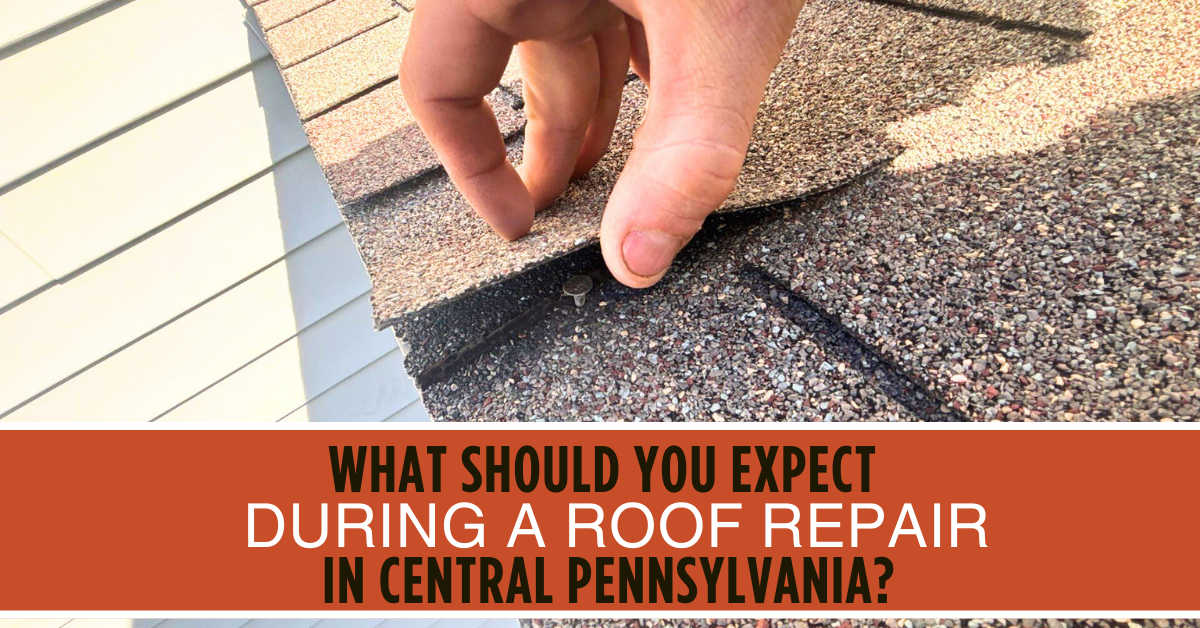
The most common roof repairs we make across central PA include chimney flashing, pipe boots, popped nails, ridge vents, and wind damage. Although every home is different, these problems are usually the result of age, weather damage, or occasionally poor-quality materials or inadequate insulation.
Repairing these issues can run from $800 to $3,500+, depending on the complexity of the repair. We dig more into price ranges in our guide for the 5 Most Common Roof Repairs.

Is a Roof Leak an Emergency?
Sometimes a roof leak can be an emergency, but not always. A roof leak becomes an emergency when water is actively entering your home and causing interior damage or safety risks.
The challenge for homeowners is determining which leaks require immediate action and which can wait for scheduled repairs. The table below can help you quickly understand the difference.
When Is a Roof Leak an Emergency?
| Situation | Emergency Level | Worth Noting | What Homeowners Should Do |
| Water dripping into living areas, rapidly growing ceiling staining, and drywall sagging | High | Interior damage can spread | Call a roofer immediately for an inspection to determine if repair or replacement is needed |
| Large storm damage or large portions of missing shingles | High | Roof decking may be exposed to the weather | Schedule emergency tarping |
| A few missing shingles | Moderate | Underlayment should still be intact; if not, this is a high emergency. | Schedule for an inspection |
| Ice dam leaks during winter weather | Moderate | Ice Dams usually can’t be safely removed and will need to wait until they melt before repair can begin | Containe leak and schedule a roofer for inspection once temperatures are above freezing |
| Small ceiling stain with no active dripping | Moderate | Damage may be hidden, but spreading slowly | Schedule an inspection soon |
| Shingle damage without visible leaks | Low to Moderate | Can become a leak source later | Schedule an inspection before the next storm |
Even small leaks can grow into major problems if ignored. A professional inspection helps determine urgency and prevents hidden damage from spreading.
What Happens During a Professional Inspection?
A professional repair always starts with a full inspection. The process is like detective work, gathering clues from different areas to find the source of the problem. Roof leaks are rarely located exactly where water appears inside the home.
A thorough inspection typically includes:
- Examining the leak inside your home
- Inspecting attic spaces for moisture or damage
- Reviewing the roof surface and flashing areas
- Taking clear photos for documentation
- Checking for additional damage that may cause future leaks
A professional should inspect your entire roof to identify any issues you may not be aware of yet.
What Should a Repair Estimate Include?
A good repair estimate should clearly show what’s damaged, what’s being fixed, what materials are included, and why that work is necessary. Homeowners should keep an eye out for unclear scopes, vague material descriptions, or verbal claims that aren’t written down.
Your contractor should diagnose problems like a doctor, write their scope of work like a lawyer, and explain everything like a kindergarten teacher.
Evaluating Replacement Recommendations
If a contractor recommends a full replacement instead of a repair, their documentation should support that with evidence. Widespread granule loss or large areas of damaged shingles are signs that your roof is near the end of its lifespan.
Be cautious if a contractor is pushy about replacement without clear documentation. Many roofers benefit more from replacements than repairs. To help homeowners weigh their options, it can be helpful to compare common repair versus replacement situations side by side.
Roof Repair vs Roof Replacement: How to Decide
| Factor | Repair Usually Makes Sense | Replacement May Be Better |
| Roof Age | Under 15 years old | Over 15–20 years old |
| Damage Area | Localized damage | Widespread deterioration |
| Shingle Condition | Shingles still flexible and intact | Shingles brittle or losing granules |
| Leak Frequency | First or isolated leak | Multiple recurring leaks |
| Cost Comparison | The repair cost is significantly lower than the replacement cost | Repair cost approaching replacement cost |
| Long-Term Value | Extends roof life safely | Provides full roofing system reset |
This comparison helps homeowners make decisions based on long-term value instead of short-term cost alone.
When Might a Contractor Need to Remove Shingles?
A more in-depth inspection, in which a contractor needs to remove parts of the roof, becomes necessary when there is no visual evidence of roof damage despite leaking.
This process may involve:
- Removing shingles or roofing layers to find hidden damage
- Inspecting underlayment and roof decking
- Repairing and reinstalling materials after diagnosis
In-Depth Inspection Costs
For a half-day job with a two-person crew, expect costs between $1,200 and $1,500. This includes labor and materials to tear apart the roof, find the issue, fix it, and put everything back together.
If the job takes longer, a full-day rate typically ranges from $2,400 to $2,600.
What Does the Repair Process Look Like?
Most roof repairs follow a similar step-by-step process and are usually completed in a day or less.
Typical repair steps include:
- Installing safety anchors and ladder protection
- Removing damaged roofing materials
- Repairing underlayment, flashing, or decking
- Reinstalling shingles or roofing components
- Cleaning up debris and documenting finished work
There should be photos of every stage so you can see what was torn apart, what it looked like underneath, and the finished repair.
What Factors Affect Repair Costs?
The biggest cost driver is usually labor and time.
Other factors that affect pricing include:
- Size of the damaged area
- Accessibility of the roof section
- Hidden structural or moisture damage
- Type of roofing materials
- Weather conditions during repairs
Why a Short Repair Doesn’t Mean It’s Cheaper
Repair pricing reflects reserved time, crew preparation, and project planning. Think of it like a doctor's appointment. If the doctor diagnoses your problem in five minutes, you still pay for the appointment time that was reserved for you.
Repairs can easily take longer than expected due to hidden damage, so pricing is based on anticipated scope rather than exact time spent.
What If the Repair Does Not Fix the Leak?
Professional repairs are designed to solve the problem long-term, and most contractors offer workmanship guarantees. However, water can enter a roof from multiple sources. Sometimes fixing one problem reveals another issue that was not visible before.
If a leak continues after repair:
- Contact the contractor immediately
- Allow additional inspection to locate other leak sources
- Work together to resolve the issue
A good contractor will come back and investigate. If the leak is from a workmanship issue, they should fix it at no charge.
During the estimate stage, ask how they will proceed if the repair does not resolve the leak. If they claim their work never has issues, that is a red flag.
How Long Should a Repair Last?
A properly completed repair should last for the remaining life of your roof. If your roof has five years left, the repair should last five years. If it has ten years left, the repair should match that lifespan.
This is why professional repairs focus on rebuilding roofing layers instead of using temporary sealants.
Your Next Step in Roof Repair
Getting your roof repaired doesn’t have to feel overwhelming, especially when you understand the steps, costs, and decisions involved. Most leaks can be fixed effectively when diagnosed early and repaired using the right materials and methods.
Now that you know what happens during a roof repair, your next step is to understand how much it might cost. Check out our article on the 5 Most Common Roof Repairs and What They Cost, so you can budget and review estimates confidently.
At Equity Roofing, we’re here to help you make the right long-term choice for your roof. A professional inspection is the best place to start if you're dealing with roof damage. If you’re getting to get started, get a free estimate today.

Leave a comment.