
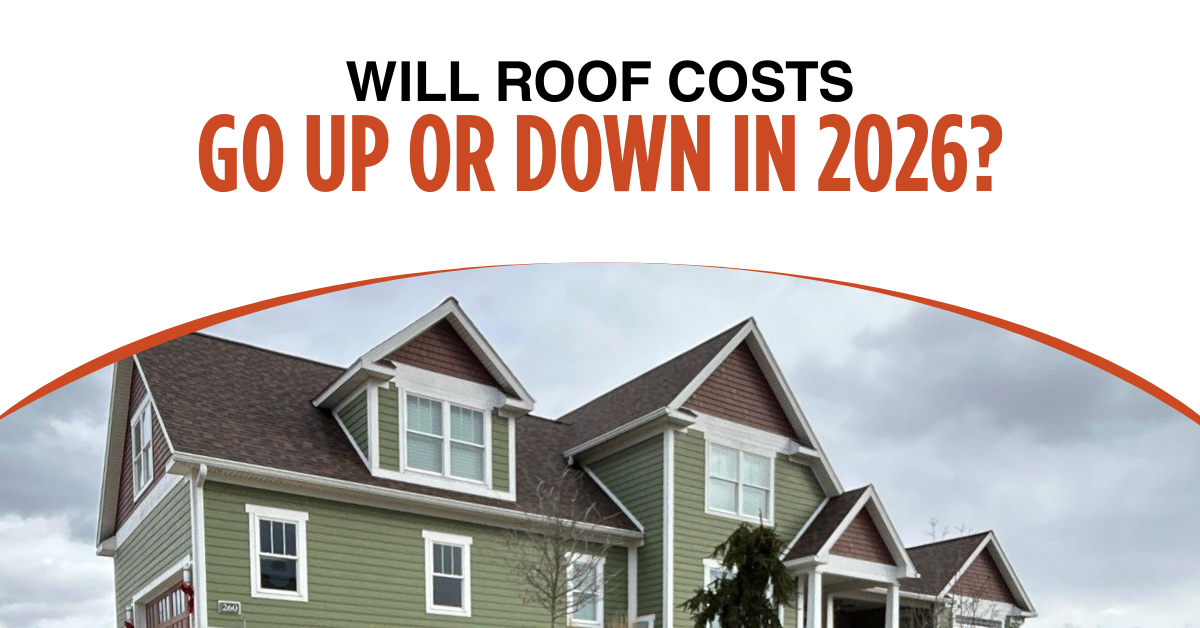
Are you waiting to replace your roof because you think prices might drop in 2026?
Have you noticed roofing costs rising lately and wondered why they never seem to go back down?
It’s true: roofing prices rarely fall—and when they do, it’s temporary. At Equity Roofing, we explain roof costs to hundreds of homeowners across Central PA to help them plan their home improvement budget. We believe you deserve to understand what drives those costs so you can make informed decisions, not just accept a number without context.
That’s why we created this guide. In this article, you’ll learn why roofing prices increase each year, what to expect in 2026, and how to budget ahead so you don’t overpay when the time comes.
Why Do Roof Prices Increase Every Year?
Roof prices increase every year because of the rising cost of materials, labor, and transportation. Inflation plays a natural role, but it’s only part of the story.
Several factors work together to push prices higher:
- Inflation: A general rise in prices across the board. This is the most consistent factor year after year.
- Supply and demand: When demand spikes after storms or during shortages, suppliers raise prices to manage inventory.
- Tariffs and political shifts: Government regulations can raise material costs, especially for imported products.
- Labor shortages: Fewer skilled workers mean higher competitive wages, which add to project costs.
- Natural disasters: Big storms cause nationwide spikes in material costs. For example, after Hurricane Katrina, prices for sheathing and roofing materials increased nationwide.
How Much More Does a New Roof Cost Each Year?
In a typical year, a new roof is likely to cost about 3-5% more than the previous year. While that may not seem significant, those increases add up over time.
Prices for roofing and construction, in general, rarely go backward. Even if inflation slows, roofing costs usually don’t return to previous levels. Some years, however, bring much larger jumps due to outside events like supply chain disruptions or labor shortages.
Here’s how pricing has changed over the last five years and why:
Roofing Price Increases Since 2020
| Year | Avg. % Increase | Major Cause | Notes |
| 2020 (COVID) | 6–10% (multiple) | Supply chain, labor, demand | Up to 5 increases in one year |
| 2021 | 4–6% | Continued inflation | COVID effects continued |
| 2022 | 3–5% | Standard inflation | More stable year |
| 2023 | ~3% | Tariffs, labor pressure | Typical yearly rise |
| 2024-2025` | 0–1% | Negotiated pricing, slower demand | Flat for some contractors |
| 2026 (expected) | 4–6% | Tariffs + labor shortage | Early projections |
Even in years where prices stay relatively flat, the long-term trend remains upward. These trends are supported by data from the National Roofing Contractors Association, which shows construction material prices continued climbing in 2025 across the industry.
We discuss why roofing quotes vary so much in more detail in our article.
Which Roofing Materials Have Increased the Most in Price?
All roofing materials have gone up in price, but some have increased more than others. The biggest jumps typically happen when materials are tied to global supply chains or tariffs.
Here’s how different roofing components have trended over the last five years:
Material Price Trends Over the Last 5 Years
| Material | Price Trend | Notes |
| Asphalt Shingles | Moderate | Spiked during COVID, stabilized recently |
| Metal (Aluminum) | Significant | Impacted heavily by tariffs and demand |
| Underlayment | Slow | Steady but less dramatic increases |
| Accessories | Mild | Fluctuates with supply chain issues |
| Labor | High | Driven by wages, safety, and benefits |
This is also why the price gap between metal and shingles has narrowed in recent years. This shift aligns with rising material costs tracked by the National Association of Home Builders, which reports long-term inflation in roofing metals and asphalt-based products.
We take a deep dive into the actual cost of a roof in our price guide, with price ranges based on home size and roof complexity.

How Have Roofing Labor Costs Changed in the Last 5 Years?
Roofing labor costs have increased significantly over the last five years, largely due to worker shortages and higher expectations for pay and benefits.
Today’s roofing crews cost more because:
- Roofing is skilled, demanding work, and fewer people are entering the trades.
- Roofing companies are offering benefits to retain talent. Health insurance, retirement options, and better working conditions are more common than they were in the last decade.
- Safety and training cost money. Many companies now invest heavily in safety programs and equipment.
In many cases, safety, training, and insurance alone make up 30% or more of labor costs. While this raises prices, it also improves quality and reduces mistakes. A 2025 contractor survey from Roofing Contractor Magazine confirms that labor shortages and rising wages remain top concerns for roofing businesses.
Do Roof Prices Ever Go Down or Stay the Same?
Roof prices rarely go down, but they can stay flat for short periods. This usually happens when demand slows or contractors negotiate supplier pricing.
From 2024 to 2025, some contractors—including Equity Roofing—were able to avoid planned price increases through supplier negotiations. That said, most manufacturers still raise prices once per year, usually in the spring, with two to three months’ notice.
This anecdotal stability matches a broader slowdown in price hikes reported in the 2025 State of the Roofing Industry, which noted calmer material costs despite strong demand.
During extreme situations like COVID, prices sometimes changed daily without warning.
When Is the Best Time of Year to Buy a New Roof?
Winter is often the best time of year to replace a roof if pricing is your main concern. Demand is lower, and contractors are more motivated to keep crews working.
Here’s how seasonality affects pricing:
- Spring and fall: Highest demand and higher prices
- Summer: Busy but weather-dependent
- Winter: Lower demand and more pricing flexibility
Even if a manufacturer raises prices during winter, contractors are often slower to pass those increases along.
How Can I Budget for a Roof Replacement Without Stress?
The best way to reduce stress is to plan before your roof fails. Most homeowners don’t budget for roofing until they’re forced to.
A better approach is to set aside money for major home expenses like roofs and furnaces. Roof inspections will help you determine how much life your roof has left.
Watch for visible warning signs instead of waiting for leaks, and talk to a roofer to understand timelines, materials, and financing options. Planning early gives you options not available to those who wait.
And make sure to avoid these common mistakes homeowners make when comparing roof quotes!

What Are the Biggest Myths About Roofing Prices?
One common myth is that metal roofing is always far more expensive than shingles. That used to be true, but today the price gap is much smaller.
Another myth is that contractors raise prices just to increase profits. In reality, most reputable contractors raise prices to keep skilled crews, improve safety, and maintain quality. Cutting labor costs usually leads to poor workmanship and unhappy customers.
Should I Replace My Roof Now or Wait Until Next Year?
If your roof is functioning well, there’s no reason to panic about replacing it in the future; but if it’s nearing the end of its lifespan and you plan to stay in your home, replacing it sooner usually makes more sense.
Replacing now allows you to:
- Maximize warranty coverage
- Avoid emergency repairs
- Reduce exposure to future price increases
Waiting only helps if your roof still has real life left and isn’t suffering from damage like granule loss, which keeps it from protecting your home to its fullest. Learn how to tell if you need a roof repair or full replacement in our homeowners' guide.
What Should I Do If I’m Ready for a New Roof?
Roofing costs are only going to continue going up, much like everything else in the construction world. Now that you understand what drives those increases, you’re in a better position than most to plan ahead and avoid unnecessary stress or costs.
If your roof is showing signs of age or damage, now is the time to get proactive. The sooner you plan, the more control you have over the timeline and your budget.
Your next step is to find out how quickly you can get on the schedule to potentially replace your roof. Contractor availability fluctuates more than most people expect.
At Equity Roofing, we’re here to educate, not put on the sales pressure. We’ve helped hundreds of homeowners throughout Central PA plan their projects with realistic timelines and budgets—when you’re ready, we’re ready to help you take the next step.


Leave a comment.