
If you’ve ever noticed a brown ring spreading across your ceiling or picked up shingle pieces after a windstorm, your roof may already be asking for attention.
In Northern Indiana and Southwest Michigan, roofing problems tend to show up quietly, then escalate fast. In this region, common roof repairs typically fall between $800 and $3,500, depending on how early the issue is caught.
At Equity Roofing, we’ve spent decades helping homeowners across Northern Indiana and Southern Michigan avoid costly roofing surprises. As an Owens Corning Platinum Preferred Contractor, our focus is simple: do it right, protect your warranty, and help your roof last as long as possible.
In this guide, we’ll break down the most common roof repairs we see in Midwest climates, what usually causes them, what they cost, and how to prevent them from turning into full roof replacements.
What Roof Problems Are Most Common in Northern Indiana & Michigan?
Homes in the Michiana region deal with lake-effect snow, freeze–thaw cycles, high winds, and heavy spring rain. Over time, those conditions stress roofing systems—especially where materials meet or airflow is poor. Many of these failures are also tied to winter moisture issues, as explained in Winter Roof Leaks and Solutions.
Here are the five repairs we handle most often.
1. Chimney Flashing Leaks
Chimney leaks rarely come from the bricks themselves. The real problem is usually the flashing, the metal system that seals the joint between the roof and chimney.
In older homes around, we often find flashing that was reused during a prior roof replacement or installed incorrectly to save time. Over time, water works its way behind the metal and into the attic—an issue we frequently uncover during attic inspections like those described in Why Good Roofers Inspect Your Attic Before Replacing a Roof.
Signs to watch for:
- Water staining near the chimney indoors
- Shingles lifting or curling around the chimney
- Damp attic insulation near the chimney chase
Typical repair cost: $1,200–$3,500+, depending on chimney size and condition
2. Pipe Boot Failures
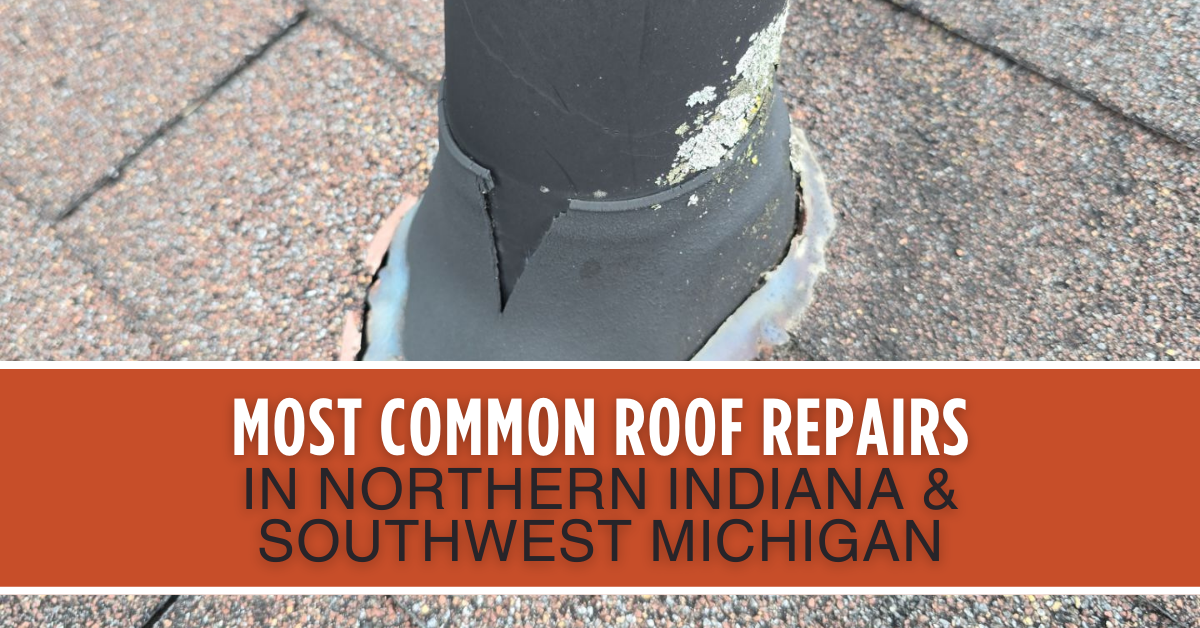
Every home has plumbing vents that exit through the roof. The rubber or metal seals around those pipes—called pipe boots—are one of the first components to fail in northern climates.
Cold winters and summer UV exposure cause rubber boots to dry out, crack, and split, especially on roofs over 10 years old.
Common warning signs:
- Cracked or brittle rubber around vent pipes
- Tar or caulk from previous “patch” attempts
- Leaks appearing near bathrooms or kitchens
Typical repair cost: $900–$1,000+
3. Popped Nails & Fastener Back-Out
If shingles look like they’re lifting or forming small ridges, the issue may be nails backing out of the roof deck. This is often tied to poor attic ventilation—a common problem in older Indiana and Michigan homes.
When heat builds up in the attic, it expands the decking and pushes nails upward, creating entry points for water. This same trapped heat also contributes to ice dams, which are explained in detail in Why Ice Dams Form on Midwest Homes (And How to Stop Them).
Red flags include:
- Shingle edges lifting or “fish-mouthing”
- Water staining on ceilings or upper walls
- Excessive attic heat
Typical repair cost: $1,800+, depending on scope and ventilation needs. Multiple popped-nail repairs often indicate the roof is nearing the end of its usable life.
4. Ridge Vent Failures
Proper ventilation is critical in a northern climate. Unfortunately, many older roofs still have narrow aluminum ridge vents that don’t provide adequate airflow and are prone to leaking during wind-driven rain.
Modern ridge vents are wider, better sealed, and far more effective—but mixing systems or installing the wrong vent can void warranties.
Common symptoms:
- Leaks along the roof peak
- Visible gaps or shifting at the ridge
- Ice dam issues in winter
Typical repair or replacement cost: $1,500+
5. Wind Damage After Storms
Strong winds are a fact of life across lakefront communities. Even if shingles don’t blow completely off, wind can loosen seals and shorten a roof’s lifespan.
Granules collecting in gutters are often an early warning sign. If you’re seeing this, review the information available in What Does Granule Loss Mean for Your Roof?
Watch for:
- Missing or creased shingles
- Granules collecting in gutters
- Leaks appearing after storms
Typical repair cost: $800+
Can Roof Repairs Be DIY Projects?
Some homeowners consider handling small repairs themselves, and while that can work temporarily, it can come with risks. Think of roofing like engine work on a vehicle. You might tighten a loose bolt, but deeper issues require professional tools, training, and inspection.
Many “quick fixes” end up costing more long-term, especially when they affect warranties or hide deeper problems. This is a common reason quotes vary, as explained in Why is One Roofing Quote More Expensive Than the Other?.
DIY vs. Professional Repairs
| Repair Type | DIY Friendly? | Benefits of Going Pro? |
| Popped nails | Temporary only | Risk of falling; improper nailing can cause more damage |
| Pipe boots | Temporary only | Can replace the pipe boot for a long-term fix |
| Chimney flashing | No | High leak risk; warranty issues |
| Ridge vents | No | Able to guarantee system compatibility |
| Wind damage | No | Able to find hidden damage that's often missed |
Improper repairs can void manufacturer warranties and cause more damage down the road.
How to Prevent Costly Roof Repairs
Most roofing failures don’t happen suddenly; they develop over time. Preventative care is especially important in Northern Indiana and Michigan, where roofs face extreme seasonal swings.
Five Ways Homeowners Can Keep a Healthy Roof
- Schedule professional inspections annually (and after major storms)
- Keep gutters and roof valleys clear to prevent water backup and ice dams
- Ensure proper attic ventilation to reduce heat and moisture buildup
- Use quality materials for all repairs, even small ones
- Perform visual checks from the ground using binoculars
Professional inspections typically cost $200–$300 and often save thousands by catching problems early.
Roof Repair FAQs
Can a leak be repaired without replacing the roof?
Yes, if it’s isolated and addressed early. Recurring leaks usually indicate a deeper issue.
Will homeowners insurance cover roof repairs?
Storm-related damage often is. Normal wear and aging typically are not.
Can I mix shingle or vent brands during repairs?
Mixing materials can void warranties. Always verify compatibility first.
When is replacement smarter than repair?
If repairs are frequent, widespread, or the roof is near the end of its lifespan, replacement may be the better investment. Our roof repair vs replacement video walks homeowners through that decision in plain language.
How to Choose the Right Roofing Contractor
By now, you know which roof problems are most common in the Midwest, and why quick action matters.
When choosing a contractor, look for:
- Manufacturer certifications
- Local experience in northern climates
- Transparent pricing
- Warranty-protected installations
- Strong local reviews
At Equity Roofing, we’re proud to serve homeowners across Northern Indiana and Southern Michigan. Whether you need a minor repair or a full replacement, our team provides honest evaluations and clear next steps.
Schedule a free consultation today and take the guesswork out of protecting your home.

.png?height=200&name=_Is%20Your%20Roof%20Ready%20for%20Winter%20Here%E2%80%99s%20How%20to%20Prevent%20Damage%20(3).png)
Leave a comment.