
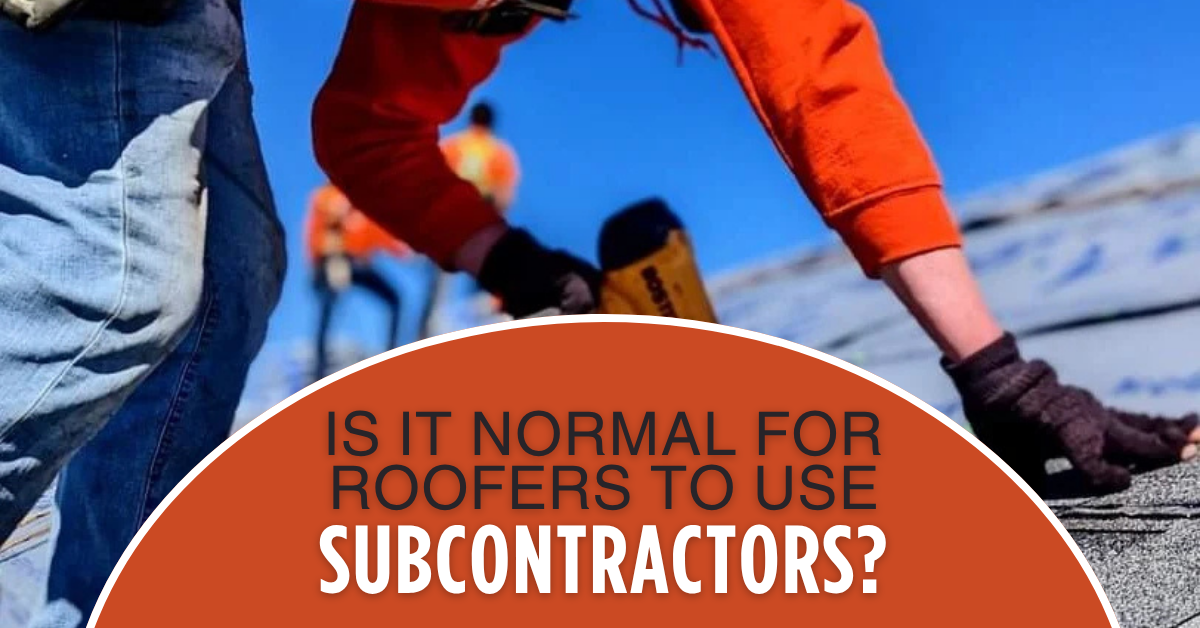
Subcontractors are a normal and often beneficial part of how roofing companies operate. And yet, ask a roofer about subcontractors, and they’ll probably get a little quiet and try to uncomfortably shuffle away from the topic.
Despite being incredibly common in roofing, subcontractors are kept as a closely guarded secret, shared only when someone thinks to ask—but it's your house and your money. Shouldn’t you know exactly who’s working on it?
When Equity Roofing made “transparency” one of our core values years ago, that wasn’t just to sound pretty. We believed it was the right thing. We meant it then, and we mean it now, so it's time to talk about the elephant in the room: subcontractors in roofing. Or, as we like to call them, trade partners.
In this guide, we’ll discuss what subcontractors are, why roofers use them, how Equity Roofing hires and manages our own subcontractors, and any red flags to watch out for. Whether you work with us or not, this is information that every homeowner looking to have roof work done should know.
What Is a Subcontractor in Roofing?
A subcontractor is an independent crew that a roofing company brings in to complete work on a project. While they aren’t directly employed by the company, they work under that company’s direction and standards on a given job.
Think of it like a freelancer. Just like a marketing agency might hire a freelance writer for a big campaign, a roofing company might bring in a specialized crew to handle a specific type of installation. The marketing agency is still responsible for the quality of the final product, and the same principle applies in roofing.
Why Do Roofing Companies Use Subcontractors?
Since roofing is a seasonal trade, with highs in the summer and lows in the winter, subcontracting allows a roofing company to keep lead times reasonable and avoid seasonal layoffs.
If a company hired enough full-time employees to handle its busiest weeks, it would need to lay many of them off every winter. That creates high turnover and, with it, inconsistent quality year over year. Instead, many companies keep a reliable core crew in-house year-round and partner with trusted trade partners to serve more homeowners during peak season.
Benefits of Using a Trade Partner in Roofing
| Benefit | What It Means for You | The Alternative |
| Shorter lead times | Your project is typically scheduled within 4-8 weeks | In-house-only companies often run backlogs of several months |
| Capacity for larger jobs | Big or complex roofs can be staffed appropriately without cutting corners on time | A fixed crew would need to double or triple in size to handle peak demand |
| Consistent, experienced crews | The same trusted people return season after season because they are not laid off in the winter | Seasonal hiring and layoffs drive high turnover and inconsistent quality year to year |
As an added benefit, subcontractors often develop specialized skill sets, such as in gutter installation. This allows for quicker work without sacrificing quality.
That said, not every roofing contractor handles subcontractors responsibly. Some roofing companies are what we refer to as a “marketing first” company, meaning that their skill and focus are on selling roofs, not installing them. So when it comes time for the roof to actually go on, they use subcontractors from start to finish, and are completely reliant on their word that they’ve done everything well.
Some roofing contractors are also less than picky about choosing who they allow to work for them, resulting in hired subcontractors that aren’t as professional (or punctual) as they should be.
How Does Equity Roofing Manage Its Trade Partners?
A site supervisor from Equity Roofing is assigned to every project, regardless of whether it is an in-house crew or a trade partner. That supervisor is there to make sure things are done to our standards, handle any questions or issues in real time, and conduct a final inspection once the job is complete.
While the use of subcontractors is common in roofing, what separates a responsible company from others is what happens before, during, and after that crew sets foot on your property.
Before a trade partner ever works on a customer project, we go through a thorough vetting process.
Equity Roofing’s Subcontractor Vetting Process
| What We Require | Why We Require It |
| General liability insurance and workers’ compensation | Protects the homeowner, the crew, and Equity Roofing if anything goes wrong on your property |
| W-9 and signed subcontractor agreement | Creates a legal relationship that holds all parties accountable |
| Review of our standard installation practices | Ensures they install your roof to our quality standards |
| Personal experience with their work before homeowner jobs | Leadership has seen their quality firsthand before they ever set foot on a customer’s property |
| Close management on the first several jobs | Gives us a chance to verify their consistency and establish the relationship before extending more independence |
In many cases, new subcontractors are tried on personal projects first. That means leadership has seen their work up close before they ever touch a customer’s home. Subcontractors are essentially being evaluated on every job, and repeated quality issues result in the end of our working relationship.
What Happens if Something Goes Wrong on My Roofing Project?
If something ever goes wrong on an Equity Roofing project, our crew follows the same standard process: we return to the jobsite, evaluate the issue, and make it right.
This same process applies to any subcontractors we work with. They get the opportunity to come back and correct it, with our supervisor involved in that visit. If the issue is minor and the supervisor can address it on the spot, that is often handled directly.
If the subcontractor cannot get back quickly, or if the issue is not resolved on their return, our own in-house crew takes care of it. The subcontractor is then responsible for those costs.
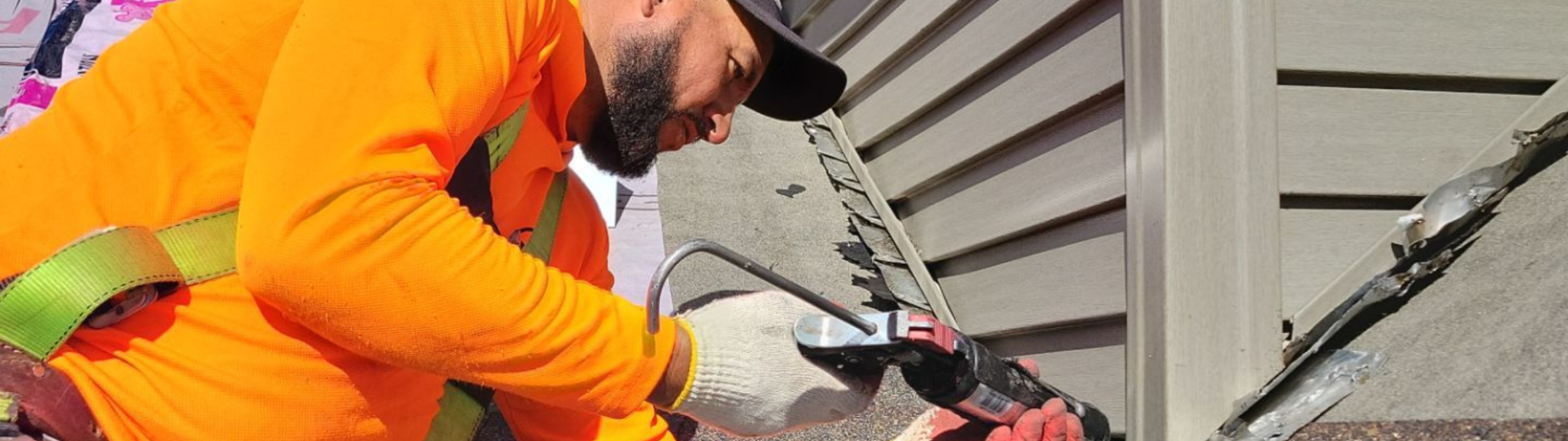
This is why there’s a big difference between a company that uses subcontractors to support its own crews and one that relies entirely on subcontractors. A company without its own crew has no backup when something needs to be corrected quickly. Equity Roofing can step in and fix it ourselves because we have that in-house team ready to go.
Regardless of who installed your roof, your workmanship warranty is always with Equity Roofing. It does not matter whether the crew that day was in-house or a trade partner. If something is wrong, we make it right.
Red Flags to Watch for When Hiring Any Roofer
Knowing that most roofing companies use subcontractors to some degree, it’s a good idea to ask potential contractors how they manage them. Here is a quick way to tell the difference between a company doing it right and one cutting corners:
Red and Green Flags of Roofing Subcontractor Management
| Red Flag | Green Flag |
| Cannot explain their quality control process for subcontracted work | Walks you through exactly how they oversee every job, regardless of who is on the roof |
| Vague or defensive when asked about on-site supervision | Has a dedicated site supervisor assigned to every project and can describe their role clearly |
| No in-house crew at all, entirely dependent on subcontractors | Maintains in-house capacity so they can step in, verify quality, and fix problems directly |
| Cannot explain what happens if something goes wrong after installation | Has a clear correction process and a workmanship warranty that applies no matter who did the work |
The bottom line is that a roofing company that manages its trade partners well should be able to answer every question in the green column without hesitation.
Is It Bad or Good to Use Roofing Subcontractors?
There is nothing inherently wrong with using or not using subcontractors in roofing. Most larger roofing companies use subcontractors. The ones that do not are typically very small owner-operator setups. While they can do excellent work, they may only serve a smaller area, and their lead times can be significantly longer simply because there are only so many houses one crew can complete in a week.
Large companies can often serve you within a reasonable timeframe and offer more robust roofing warranties because of their investment in becoming certified contractors.
What matters most is whether the company you hire knows what good work looks like, stays involved from start to finish, and takes full responsibility for the outcome. That is exactly the standard we hold ourselves to at Equity Roofing, whether the crew on your roof is one of our own or one of our trusted trade partners.
Still have questions about how we handle our projects? Give us a call or reach out online. We are happy to walk you through our process before you ever sign anything.


Leave a comment.