
 When winter rolls into Northern Indiana and Southern Michigan, it doesn’t do it quietly. We get lake-effect snow that shows up out of nowhere, long stretches of below-freezing temperatures, and wind that cuts across open farmland without slowing down. Around here, homeowners aren’t looking for “luxury” shingles—they’re looking for shingles that won’t crack, curl, or fail when the weather turns.
At Equity Roofing, we've served hundreds of homeowners, providing quality roofing replacements and sharing our knowledge. Owens Corning’s Duration Flex® is a topic of interest that often comes up in our conversations. It’s marketed as a cold-weather, impact-resistant shingle—but does it actually perform better in our region? And is the extra cost justified?
This guide breaks down everything you need to know about Duration Flex’s cold-weather performance, how it stacks up to other shingle options, and whether it’s the right choice for your home—and your budget.
Clickable Table of Contents
- What Makes Duration Flex Different From Standard Architectural Shingles?
- What Does Duration Flex Cost in Indiana & Michigan?
- Duration Flex vs. Duration Storm: Which Fits This Region Better?
- Is Duration Flex Worth It in the Midwest?
- Duration Flex vs Other Winter-Ready Shingles
- How to Decide if Duration Flex is Best For You
What Makes Duration Flex Different From Standard Architectural Shingles?
If you’re comparing shingle options in Indiana or Michigan, the biggest difference you’ll see with Duration Flex is the SBS-modified asphalt formulation. Think of SBS asphalt as “rubberized” asphalt—it bends instead of snapping.
That’s a major advantage here, where winter installations are common and freeze–thaw cycles happen dozens of times per season.
Why Duration Flex Works Well in Midwest Winters
| Feature | What It Means for Midwest Homes |
| SBS-Modified Asphalt | Flexes in cold temperatures instead of becoming brittle |
| 130 MPH Wind Rating | Helps withstand gusts across fields, lakes, and open terrain |
| Class 4 Impact Rating | Better resilience during small hail events |
| Cold-Weather Install Capability | Can be installed during winter without sacrificing shingle adhesion |
In many older neighborhoods across Michiana—where attics run cold and roofs ventilate unevenly—this extra flexibility helps maintain the shingle’s integrity over time.
What Does Duration Flex Cost in Indiana & Michigan?
Expect Duration Flex to run 10–15% higher than standard Duration shingles. That typically translates into an added $1,500–$3,000 for the average Midwest roof, depending on:
- square footage
- number of valleys/dormers
- ventilation requirements
- steepness
- material and labor availability in your county
Typical Price Ranges
| Shingle Type | Approx. Total Roof Cost | Notes |
| Standard Duration | $14,000–$44,000 | Reliable architectural shingle for most homes |
| Duration Flex | $15,400–$50,600 | Better cold-weather and impact performance |
Older homes in South Bend, Elkhart, Niles, and Three Rivers often have complex roof layouts or ventilation upgrades that push costs toward the upper end of the range.
Our 2025 cost guide for Indiana and Michigan homeowners covers a wider range of home costs based on material, size, and complexity.
Duration Flex vs. Duration Storm: Which Fits This Region Better?
Homeowners often compare Duration Flex to Owens Corning’s Duration Storm shingle, but the two products solve different problems.
Key Differences
- Duration Flex: Built around flexibility, impact absorption, and winter installation performance
- Duration Storm: Built around extreme wind uplift (more suited to coastal or tornado-prone regions)
Which Works Better for Indiana & Michigan?
Most Midwest homes benefit more from Flex, because our biggest issues aren’t hurricane-force winds—they’re:
- freezing temperatures
- steady seasonal wind
- regular frost action
- occasional hail
- unpredictable lake-effect storms
Regional Weather Considerations
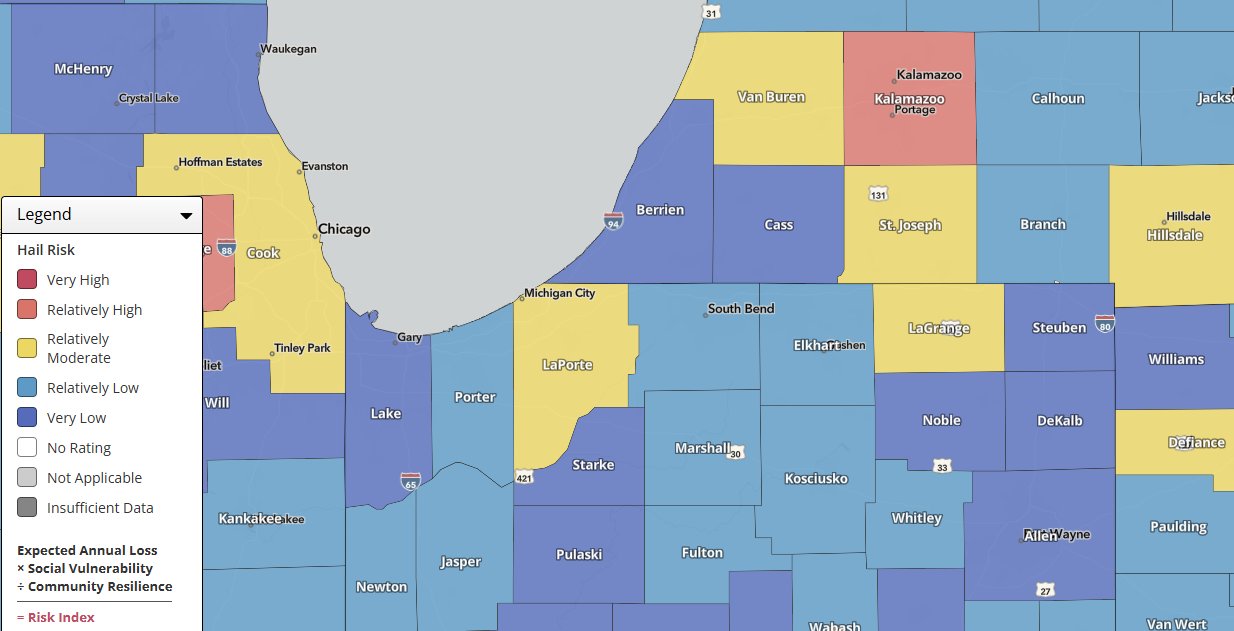
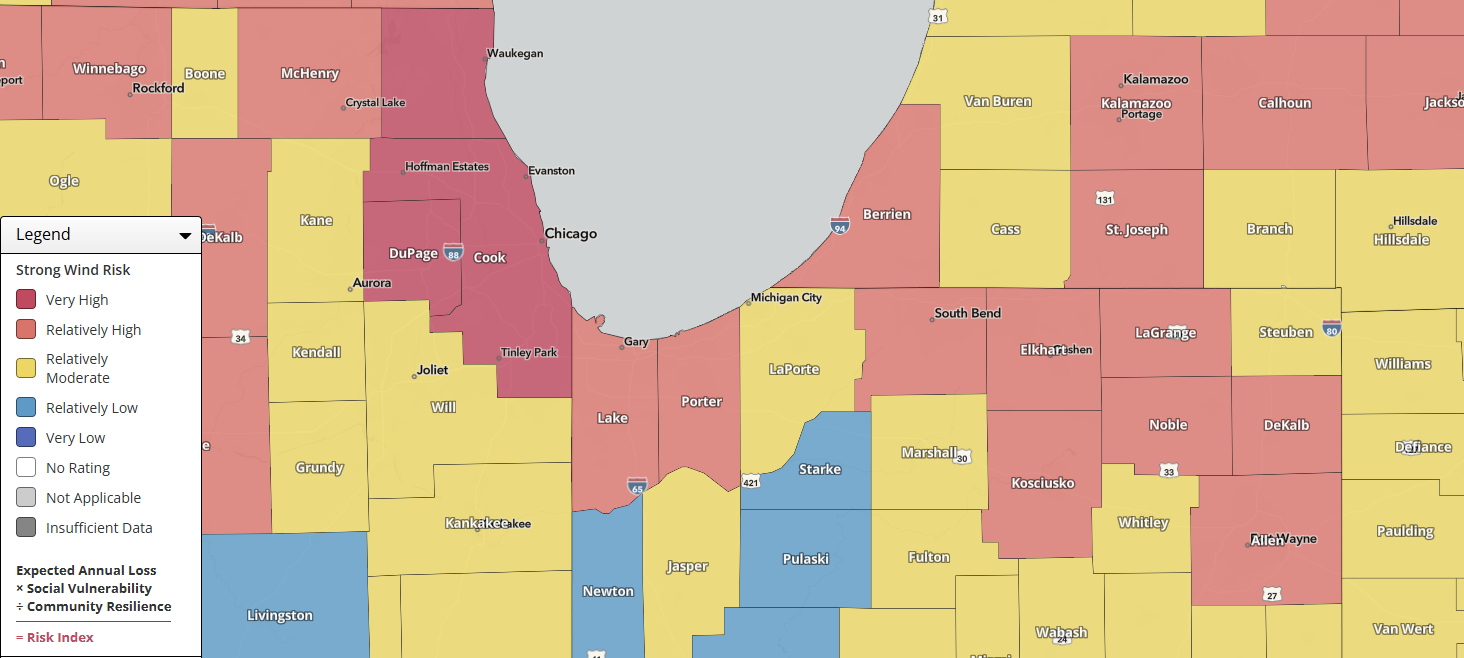
According to FEMA’s National Risk Index, most counties in our region experience:
- Low to moderate hail risk
- Moderate to high wind exposure, especially in rural and lakeside areas
Because Flex and Storm both offer the same wind rating, the added impact resilience and cold-temperature pliability make Flex the more practical choice for most homes here.
Hail Map National Risk Index Map
High Wind Map National Risk Index Map
Is Duration Flex Worth It in the Midwest?
If you’re planning to stay in your home long-term—or simply want a roof that won’t give you trouble every time winter swings back around—Duration Flex can absolutely pay off. But the value depends on your priorities and where your home sits.
Where Duration Flex Really Helps
| Factor | Long-Term Benefit |
| Winter Repairs or install needed | Can seal and perform even in colder temps |
| Home exposed to wind corridors | Resists blow-offs and edge lifting |
| Small hail is common in your area | Rubberized asphalt absorbs impacts |
| Planning to stay long-term | Lower repair frequency, longer performance consistency |
Common Misunderstandings
- Impact-resistant isn’t hail-proof. Big hail will still do damage.
- Premium doesn’t mean required. Standard Duration is a fantastic choice for most homes.
Flex makes the most sense when your home’s exposure or timing requirements demand a tougher product.
How Does Duration Flex Compare to Other Cold-Climate Shingles?
We frequently compare Duration Flex to Atlas StormMaster Shake and CertainTeed NorthGate—two popular choices for cold climates. All three are capable performers, but Duration Flex stands out because of the SureNail® strip, which helps installers get consistent fastening even in cold conditions.
Performance Comparison
| Feature | Duration Flex | StormMaster Shake | NorthGate |
| Cold-Weather Flexibility | ✓ | ✓ | ✓ |
| Reinforced Nailing Zone | ✓ | X | X |
| Class 4 Impact Rating | ✓ | ✓ | ✓ |
Color Selection
Indiana homeowners tend to choose shingles based on durability first, but color still matters—especially for curb appeal.
- Duration Flex: 9 colors
- StormMaster: 10 colors
- NorthGate: 12 colors
Duration Flex has the smallest palette, but for homeowners choosing it for performance in rough weather, that trade-off is usually worth it.
How to Decide if Duration Flex is Best For You
Here’s a simple way to evaluate your home:
Consider Duration Flex if your home…
- sits on open farmland or near lake-effect wind corridors
- experiences regular freeze–thaw cycles
- may require winter repairs
- is a long-term or multi-generational home
- has a steep or complex roof where lifted shingles are costly to fix
Homes near open farmland, wooded edges, or lake-effect snow paths tend to see the biggest benefits. For homeowners who plan on passing down their house to family members, these shingles also serve as the best way to protect the home in which your family is building a future.
Typical Roof Costs in Indiana & Michigan
The weather in our region changes fast. One day it’s freezing rain, the next day it’s lake-effect snow, and by the weekend it’s a windstorm. Whether you live in Southern Bend or Three Rivers, your roof puts in a lot of work every season.
Now you know the basics:
- Duration Flex is built for winter installs
- It performs well in freeze–thaw cycles
- It adds long-term value to homes exposed to weather
But remember: you don’t need Duration Flex to get a great roof. Plenty of Michiana homeowners choose standard Duration shingles and get excellent performance for less money.
If you want a full breakdown of roof pricing in our area—including materials, labor, roof size variables, and what affects total cost—take a look at our Roof Replacement Cost in Indiana and Michigan: 2025 Guide.
At Equity Roofing, we’ve helped hundreds of Michiana families make confident, practical decisions about their homes. Whether it’s winter, storm season, or just time for an upgrade, we’re here to help you understand your options and choose the right fit for your home and your budget.
.png?height=200&name=_Is%20Your%20Roof%20Ready%20for%20Winter%20Here%E2%80%99s%20How%20to%20Prevent%20Damage%20(3).png)
.png?height=200&name=Top%20Three%20Shingles%20for%20Winter%20Roof%20Replacement%20(2025%20Guide).png)
Leave a comment.