Updated on 12/22/2025
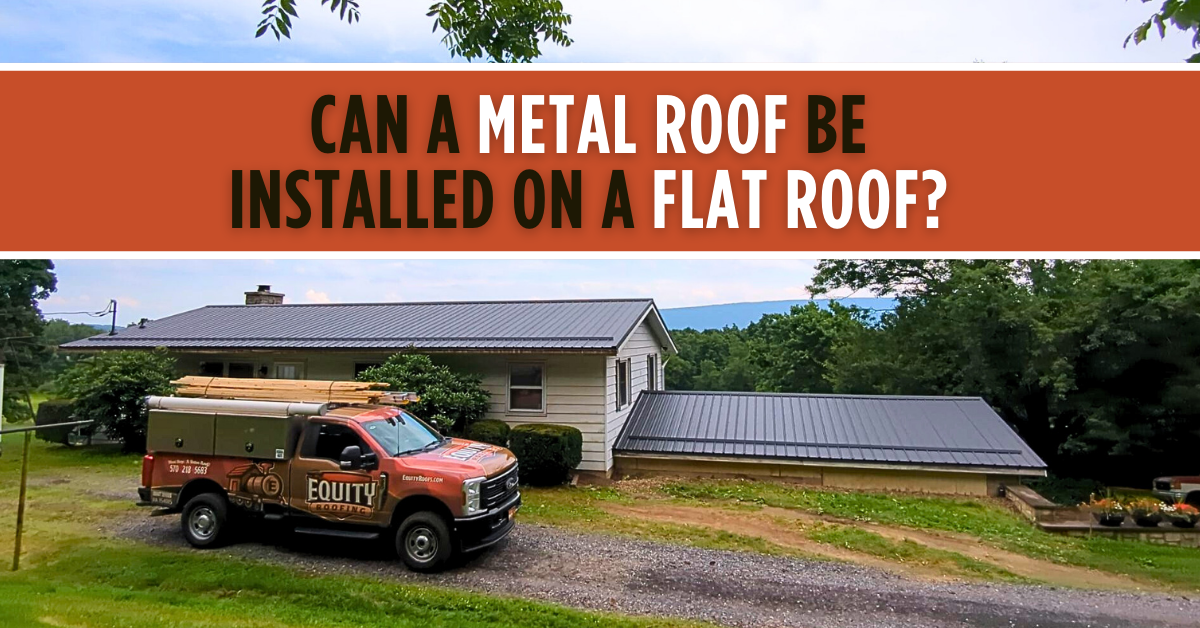
If you’re planning a roof replacement and already love the look of metal, it’s natural to want everything to match—including your garage or addition. But if one of those roofs is flat, you’re likely hearing conflicting advice and wondering what actually works.
Unfortunately, choosing the wrong roofing material for a flat roof can lead to leaks, pooling water, and expensive repairs—especially when it comes to metal. That’s where the fine print of roof pitch really matters.
At Equity Roofing, we’ve helped hundreds of Central PA homeowners protect their homes with roofing systems tailored to their roofs. We understand how confusing the various roofing rules can be, especially when they seem to contradict one another.
In this guide, you’ll learn:
- The real difference between flat and low-slope roofs (and why it matters)
- Which metal systems can work—and which can’t
- When a membrane roof may actually be the better investment
- How to know which option makes sense for your home
So, Why Can’t You Put Metal on a Flat Roof?
Metal roofing can’t be installed on a completely flat roof because it is designed to shed water, not hold it. That difference is critical.
Metal panels rely on gravity to move water off the roof. Seams and fasteners aren’t designed to sit in ponds of water for long periods of time, and can become damaged with too much exposure. Standing water can also seep into seams and cause leaks.
What Is the Difference Between a Flat Roof and a Low-Slope Roof?
A flat roof has little to no slope, while a low-slope roof does have a pitch, even if you can’t see it from the ground. Most roofs people call “flat” are not truly flat. In roofing terms, slope is measured by how many inches a roof drops over 12 inches of horizontal distance.
For example, a 2:12 pitch means the roof drops 2 inches for every foot.
A roof with no measurable drop is considered truly flat. Anything below 4:12 is generally classified as low-slope. Even a small amount of slope can completely change which roofing systems are safe to use.
What Is the Minimum Roof Slope Required for Metal Roofing?
The minimum slope depends entirely on the type of metal roofing system being used. Not all metal performs the same on low slopes.
Metal Roofing Systems vs. Minimum Roof Slope
| Roofing System Type | Minimum Recommended Slope | Works on a Flat Roof? | What Homeowners Should Know |
| Exposed-fastener metal panels | 2:12 | No | These roofs are approved to 4:12 with standard details |
| Standing seam (snap-lock) | 1.5–2:12 | No | Better than exposed fasteners, but still slope-dependent |
| Standing seam (mechanically seamed) | 0.5:12 | Sometimes | Requires sealed seams, proper underlayment, and expert installation |
| Flat roof membranes (EPDM, TPO) | 0:12 | Yes | Designed to be fully waterproof, even with ponding water |
This is why the slope of your roof—not just the appearance—should drive your decision on what material to use.

Do I Have to Use Standing Seam Metal for a Low-Slope Roof?
For roofs with a slope of less than 2:12, standing seam is the only suitable metal roof option because it protects the fasteners and seals the seams. Other metal systems leave too many failure points exposed.
Pros of Using a Standing Seam Metal Roof:
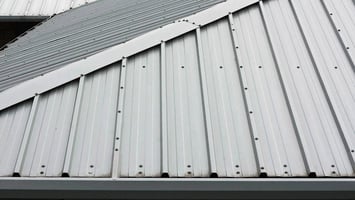
- Fasteners are hidden beneath the panels
- Raised seams make it harder for water to move sideways or backward
- Butyl tape sealants protect seams from moisture intrusion
- Underlayment provides a critical backup layer
Though even with these protections, the standing seam still needs enough slope to drain water properly.
When Does a Metal Roof Actually Make Sense on a Low-Slope Roof?
Metal can make sense when the roof has enough slope, and the design is simple. Metal is usually a reasonable option when:
- The roof has at least a 0.25:12 pitch
- There are few penetrations or wall tie-ins
Low-sloped metal roofs are most common in modern homes, additions, or architectural features where aesthetics are a factor.
Can You Add Slope to a Flat Roof to Make Metal Work?
Yes, a slope can sometimes be added to a flat roof, but it comes with added cost and complexity. Whether it is worth it depends on the situation.
If you’re interested in adding a slope to your flat roof, your options include tapered insulation (commonly used under membrane roofs to fix drainage) or wood framing (but heads up, it’s costly).
A professional inspection is the best way to determine whether adding a slope is practical.
When Is a Flat Roof Membrane the Better Choice?
A membrane roof is usually the better choice when the roof is flat, complex, or prone to ponding water. These systems are built specifically for those conditions.
Membranes make more sense when:
- The roof is truly flat or nearly flat
- There are many chimneys, pipes, or transitions
- Ponding water already occurs
- Long-term leak resistance matters more than appearance
Metal Roofing vs. Flat Roof Membrane Systems
| Factor | Low-Slope Metal Roofing | Flat Roof Membrane Roofing |
| Water management | Water-shedding | Waterproof system |
| Ponding water tolerance | Very low | High |
| Minimum slope required | 0.25:12 or greater | None |
| Installation complexity | High | Moderate |
Why Is My Low-Slope Metal Roof Leaking?
Most metal roof failures on low slopes happen because the wrong system was used or critical steps were skipped.
When this happens, we usually see mistakes like:
- Using panels not designed for the roof’s slope
- Skipping seam sealants or proper underlayment
- Treating metal like a waterproof system
- Poor flashing around penetrations
The leaks from these issues often show up during extreme weather rather than everyday rain, so it can be some time before you realize your contractor made a mistake. Always make sure you’re working with a contractor that backs their own work with a clearly defined workmanship warranty, meaning they’ll correct any errors they make!
How Do You Choose the Right Contractor for a Flat or Low-Slope Roof?
Low-slope roofing requires specialized experience, especially when metal is involved. Not every roofer is qualified to do this correctly.
A good contractor should:
- Clearly explain why a system is being recommended
- Follow the manufacturer's requirements
- Show how all components work together
- Offer a clear workmanship warranty
Be cautious of anyone who says slope does not matter or that “metal is always better.” Metal has its time and place to shine, but ultimately, you have to choose what will perform best for your specific roof.

Is a Metal Roof on a Low Roof Right for You?
While it’s natural to want to match the look of your home to your garage or addition, the function of your roof is what’s most important. Now that you know the difference between flat and low-slope roofs, you’re better prepared to avoid leaks, wasted money, and premature roof failure.
So what will it actually cost to do it right? Your next step is to check out our guides on roof replacement costs for Central PA so you can budget realistically—whether you're leaning toward metal or a membrane system.
At Equity Roofing, we’re committed to finding the best roof for each homeowner we work with. When you're ready, we're here to walk you through your options, explain your quote clearly, and make sure your roof performs the way it should.